Most security problems start long before production.
Security failing because vulnerabilities are discovered too late, security reviews happen too late, and developers receive feedback when it’s already expensive to fix. Our methodology changes that.
Before implementing controls, we assess your entire software delivery lifecycle to identify where security gaps, compliance risks, and operational vulnerabilities exist.
What we assess
Application Security
SAST • DAST • SCA
Infrastructure Security
IaC • Cloud • Kubernetes
Supply Chain Security
SBOMs • Signing • Provenance
Secrets Management
Detection • Rotation • Governance
Compliance Readiness
SOC 2 • ISO 27001 • HIPAA • PCI-DSS
Security Culture
Processes • Ownership • Awareness
Deliverables
DevSecOps Maturity Score
Risk Register
Security Gap Analysis
Compliance Mapping
Prioritized Remediation Roadmap
Executive Summary Report
what we do
Security built into every stage of software delivery.
From the first line of code to live production, we integrate security into your development pipeline so releases stay fast, compliant, and resilient.
Threat modeling
STRIDE, PASTA, or attack-tree-based modeling for your high-risk services. Output: a ranked list of threats and the controls needed to mitigate each.
Shift-left integrations
Pre-commit hooks, IDE plugins, and PR-time scanning. Developers see findings in the PR diff, not on a separate dashboard nobody opens.
SAST, DAST, SCA, IaC scanning
Tool selection, configuration tuning, false-positive triage, and pipeline integration. We deliver a working setup where the signal-to-noise ratio is actually usable.
Supply chain security
SLSA compliance, signed builds, SBOMs, dependency pinning, runtime threat detection, and production compromise monitoring.
Secrets management
HashiCorp Vault, AWS Secrets Manager, Doppler, or 1Password Secrets Automation, picked for your stack, integrated end-to-end. No more .env.production in Slack.
Compliance automation
Continuous controls evidence for SOC 2, ISO 27001, HIPAA, PCI-DSS. Auditors get dashboards, not screenshots.
DEVSECOPS PIPELINE
What a devsecops pipeline looks like at each stage
A mature DevSecOps pipeline integrates security controls at every stage of software delivery. Here is what that looks like in practice and what we implement at each stage:
1
Plan
Threat modeling and security requirements defined upfront. Security stories in sprints. Data flows reviewed. ADRs include rationale.
2
Code
Semgrep and Snyk flag issues in the IDE. Pre-commit hooks catch secrets. Linting enforces secure coding standards.
3
Build
SAST, SCA, secrets, and license scans run on every pull request. Build artifacts signed for supply chain integrity.
4
Test
DAST against staging. API security tested end to end. IAST active during execution. Manual penetration testing periodic.
5
Release
No release with open critical findings. Container image scanned. SBOM attached to artifact. Policy-as-Code enforced before shipping.
6
Deploy
IaC scanned before provisioning. Kubernetes admission controllers enforce policy. Drift detection runs against approved baselines continuously.
7
Operate
Falco monitors containers at runtime. CSPM scans for cloud misconfigurations. SIEM correlates events. Automated playbooks trigger incident response.
DEVSECOPS PIPELINE
What a devsecops pipeline looks like at each stage
A mature DevSecOps pipeline integrates security controls at every stage of software delivery. Here is what that looks like in practice and what we implement at each stage:
1
Plan
Threat modeling and security requirements defined upfront. Security stories in sprints. Data flows reviewed. ADRs include rationale.
3
Build
SAST, SCA, secrets, and license scans run on every pull request. Build artifacts signed for supply chain integrity.
5
Release
No release with open critical findings. Container image scanned. SBOM attached to artifact. Policy-as-Code enforced before shipping.
7
Operate
Falco monitors containers at runtime. CSPM scans for cloud misconfigurations. SIEM correlates events. Automated playbooks trigger incident response.
2
Code
Semgrep and Snyk flag issues in the IDE. Pre-commit hooks catch secrets. Linting enforces secure coding standards.
4
Test
DAST against staging. API security tested end to end. IAST active during execution. Manual penetration testing periodic.
6
Deploy
IaC scanned before provisioning. Kubernetes admission controllers enforce policy. Drift detection runs against approved baselines continuously.
The DevSecOps Ecosystem
DevSecOps is bigger than security scans.
From threat modeling to runtime protection, every layer works together to reduce risk without slowing delivery.
Your Software Delivery Lifecycle
Threat Modeling
STRIDE • PASTA • Attack Trees
Shift-Left Security
SAST • DAST • SCA
Secrets Management
Vault • Rotation • Detection
Supply Chain Security
SBOM • Signing • SLSA
Policy as Code
OPA • Kyverno • Gatekeeper
Runtime Protection
Falco • Tetragon • Sysdig
OUTCOMES
What changes after 90 days
The goal isn’t more security tools. It’s fewer vulnerabilities, faster remediation, and safer software delivery.
Before
Security reviews at release time
Manual compliance evidence
Unknown dependency risks
Static credentials
Reactive security
After
Security embedded in development
Automated audit trails
Continuous visibility
Centralized secrets management
Continuous protection
SECURITY EVOLUTION
How mature is your DevSecOps practice?
Security maturity isn’t about how many tools you own. It’s about how well security is integrated into delivery.
LEVEL 1
Ad Hoc
Security is manual and inconsistent.
Common Challenges
Production vulnerabilities and compliance gaps.
Next Step
Add automated scanning and basic policies.
LEVEL 2
Defined
Security tools are deployed.
Common Challenges
Alert fatigue and low adoption.
Next Step
Improve workflows and policy management.
LEVEL 3
Integrated
Security is embedded into CI/CD.
Common Challenges
Supply chain and configuration risks.
Next Step
Strengthen governance and secrets management.
LEVEL 4
Optimized
Security is automated and measurable.
Common Challenges
Advanced and evolving threats.
Next Step
Focus on runtime security and continuous improvement.
Backed by proven practices
The science behind secure delivery.
The best delivery systems aren’t built on opinions. They’re built on proven engineering principles.
Shift-Left Security
Earlier Detection
1
Zero Trust
Reduced Risk
2
SLSA
Supply Chain Integrity
3
Policy As Code
Automated Governance
4
OWASP
Secure Applications
5
CIS Benchmarks
Hardened Infrastructure
6
Backed by proven practices
The science behind secure delivery.
The best delivery systems aren’t built on opinions. They’re built on proven engineering principles.
Shift-Left Security
Earlier Detection
1
Zero Trust
Reduced Risk
2
SLSA
Supply Chain Integrity
3
Policy As Code
Automated Governance
4
OWASP
Secure Applications
5
CIS Benchmarks
Hardened Infrastructure
6
Why Techanek
Security that engineers actually use
The goal isn’t to produce recommendations. It’s to leave your organization stronger than we found it.
We reduce noise
Findings developers can trust.
We automate security
Less manual effort. More consistency.
We secure delivery
Not just applications.
We enable teams
Security becomes shared ownership.
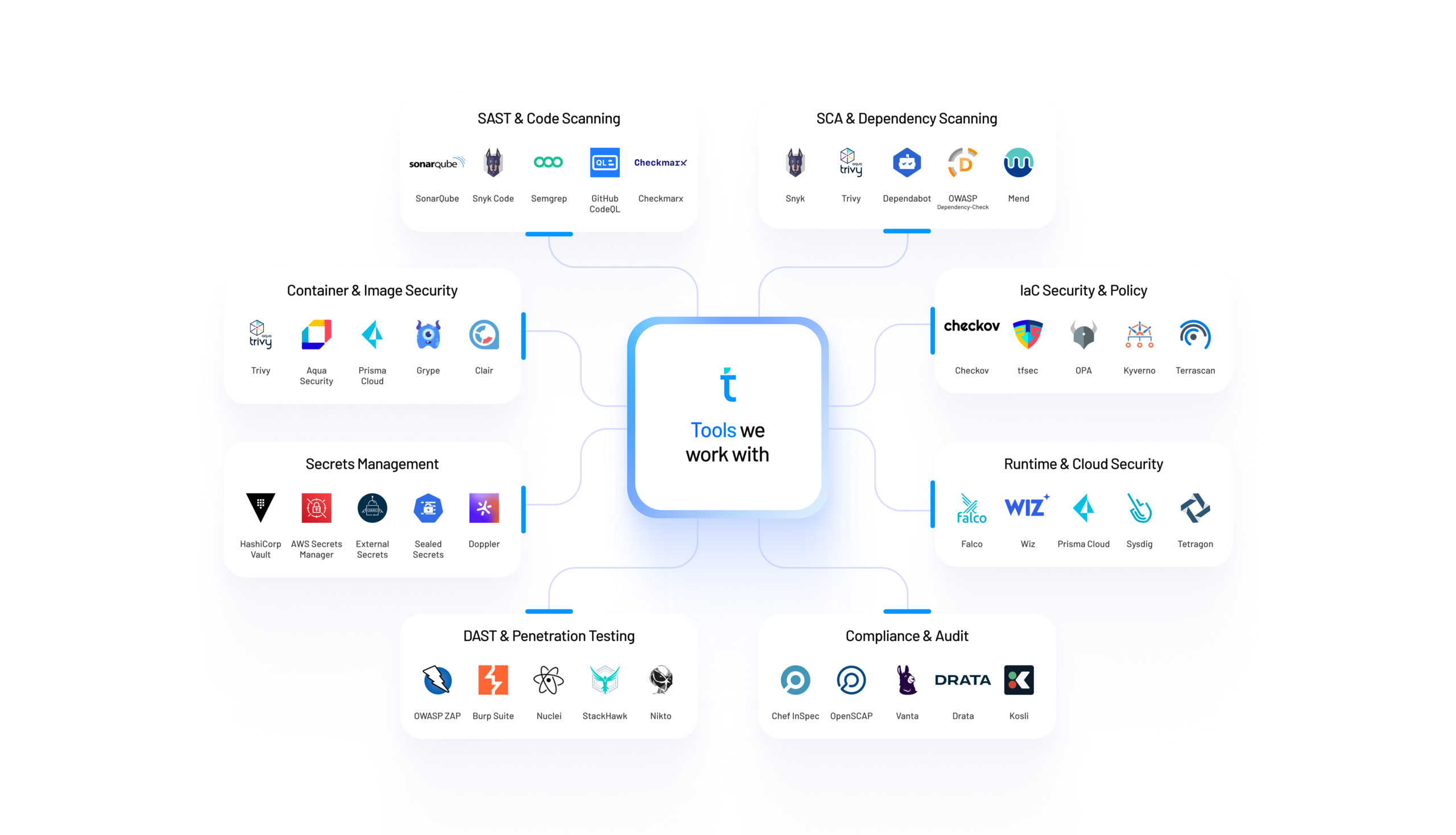
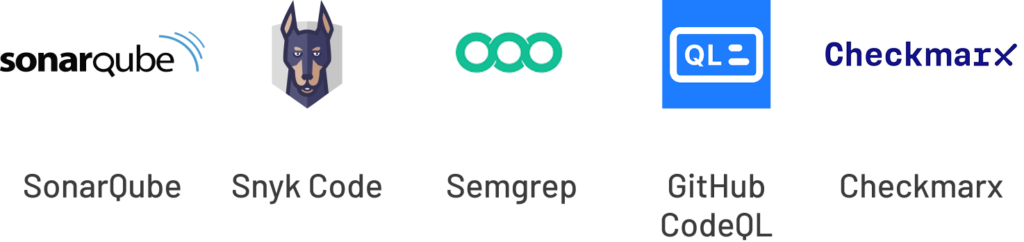
SAST & Code Scanning
SCA & Dependency Scanning
Container & Image Security
IaC Security & Policy
Secrets Management
Runtime & Cloud Security
DAST & Penetration Testing
Compliance & Audit
Ready to scale?
Find security gaps before attackers do.
A well-implemented DevSecOps program does the opposite. By catching security issues early through automated checks, teams avoid costly fixes, emergency patches, and production incidents later. Security becomes part of the workflow, not a bottleneck at the end of it.
We already have security tools. Why do we need a consulting engagement?
Having tools isn’t the same as using them effectively. Many teams generate security findings but struggle with false positives, poor adoption, or unclear policies. We help configure the tools, define workflows, and build governance that turns security into an operational capability instead of a reporting exercise.
How does DevSecOps support our compliance requirements?
DevSecOps helps automate the security controls and audit evidence required by frameworks such as SOC 2, ISO 27001, HIPAA, and PCI-DSS. We map security controls to your compliance requirements and ensure the necessary evidence is generated as part of normal operations.
How do you handle false positives from security scanners?
False positives are one of the biggest adoption challenges in DevSecOps. We tune tools to your technology stack, reduce unnecessary noise, establish clear triage processes, and define which findings should block deployments versus those that are informational.
Can you secure our existing CI/CD pipeline?
Yes. We work with GitHub Actions, GitLab CI, Jenkins, CircleCI, Azure DevOps, AWS CodePipeline, ArgoCD, and other major platforms. Security controls are integrated into your existing workflows rather than forcing a complete rebuild.
What's the difference between DevSecOps and a penetration test?
A penetration test is a point-in-time assessment that identifies vulnerabilities through simulated attacks. DevSecOps provides continuous security throughout the delivery lifecycle by detecting and preventing issues before they reach production. The two work best together, not as replacements for each other.
Can DevSecOps be applied to legacy applications?
Yes. We take a practical approach by introducing security controls that work within your current environment, including SAST, SCA, and DAST. Modernization can happen over time, but you don’t need a complete rebuild before improving security.